Introduction & Background
Before we dive into technique, it's important to understand where this knowledge comes from. In Thai massage tradition, lineage is everything — it's what gives the work its authenticity and depth. In this lesson, you'll meet the teachers and healers whose dedication preserved and shared this tradition with the world.
Father Doctor “Shivagakomarpaj”
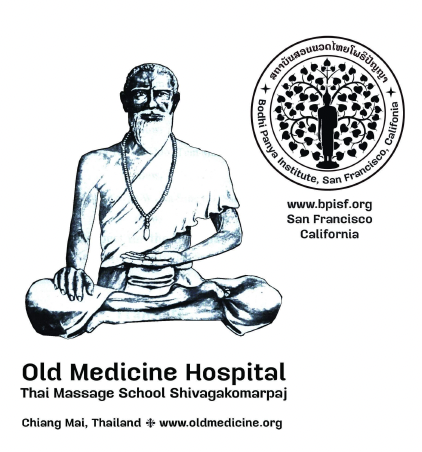
Traditional Thai healers trace their lineage back to Father Doctor Shivagakomarpaj (“Shivago”), the Buddha’s physician. In Traditional Thai Massage, the practitioner’s direct lineage of teachers demonstrates authenticity and a mark of quality.
Old Medicine Thai Massage School Shivagakomarpaj
Located in Chiang Mai, Thailand, Old Medicine was founded in 1962, and is the first school in Thailand to document and share the Northern Style of Traditional Thai Massage with the international community. To this day, Old Medicine remains the standard that Traditional Northern Style schools, teachers and practitioners worldwide follow as the original source of Northern Style Traditional Thai Massage.
Wai Kru
Prayer To Father Doctor Shivagakomarpaj
พระคาถาบูชาบรมครูหมอชีวกโกมารภัจจ์
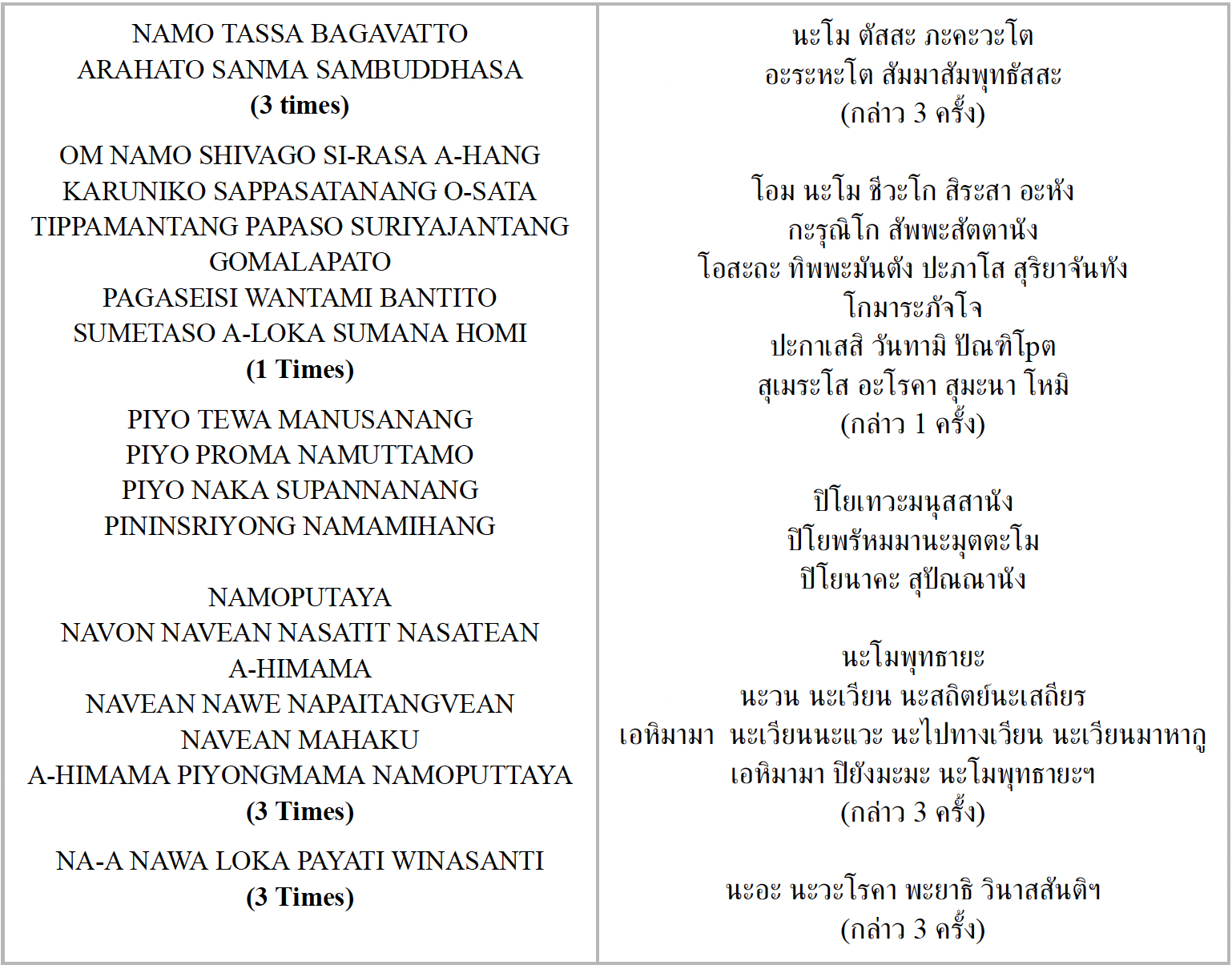
Translation
We invite the spirit of the founder, Father Doctor Shivagakpmarpaj
Who comes to us through his saintly life.
Please bring to us the knowledge of nature.
May this prayer show us the true medicine of the universe.
We ask your help and pray for wellness and health for the body of our client.
The god of healing dwells in the heavens high mankind dwells in the world below.
In the name of the founder, may the heavens above be reflected in the earth below so that this healing medicine may encircle the world.
We pray for the one whom we touch, that he will be happy and that any illness will be released from him.
Ajahn Sintorn Chaichakan
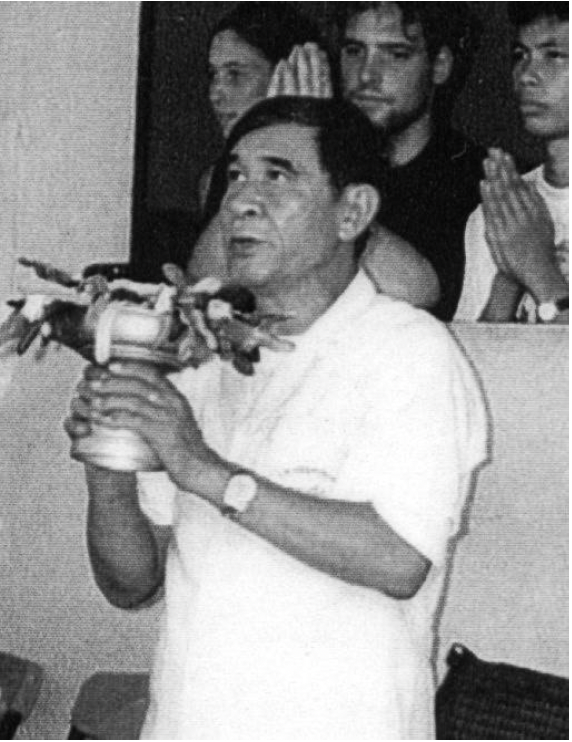
We honor Ajahn Sintorn Chaichakan as the founder of the Shivaghakomarpaj lineage of Northern Style Thai massage, and our primary teacher. (“Ajahn” is an honorific title given to respected teachers and is usually translated as ("Master").
Ajahn Sintorn first studied traditional Thai medicine at Wat Pho in the late 1950s. Upon completing his degree in 1958, he stayed on as a teacher for four more years. At that time, Wat Pho did not teach Thai massage. It was at the personal request of His Majesty King Bhumibol Adulyadej (Rama IX), that Ajahn Sintorn helped to create and start the Thai Massage program at Wat Po as a complement to the traditional herbal medicine training Wat Po had offered for many years.
In 1962, Sintorn returned to Chiang Mai and began to practice medicine at a small dispensary on the grounds of several city temples. By this time, the government of Thailand was only interested in supporting Western medicine, and Thai traditional medicine was kept alive by its association with Buddhist institutions.
Living in the north of Thailand, Ajahn Sintorn adapted his practice of massage and herbal medicine to incorporate aspects of northern culture. One important change he made to the Wat Pho (Southern Style) massage routine was to slow it down, he says to suit the "laid-back style" of Chiang Mai natives. He also focused on local herbal knowledge, incorporating treatments that were not part of the Wat Pho tradition into his pharmacopoeia.
In 1973, Ajahn Sintorn purchased land just outside of Chiang Mai center and established the current facility. With only a small grant from the government to start up, the institution was quite small at that time, with only 10 in-patient beds. From these humble beginnings, the institution's traditional medicine hospital grew to the current size. In the 1990s, the program graduated an average of 60-70 Thai students per year in traditional medicine, and the Western students of Thai massage numbered well into the hundreds. Today, Old Medicine is and remains the sine qua non (essential source) of Northern Style Traditional Thai Massage worldwide.
Now that you have a sense of the lineage and the spirit behind this practice, we'll begin to look at the broader history of foot massage and reflexology — tracing the ancient roots of this work long before it arrived in Thailand.